

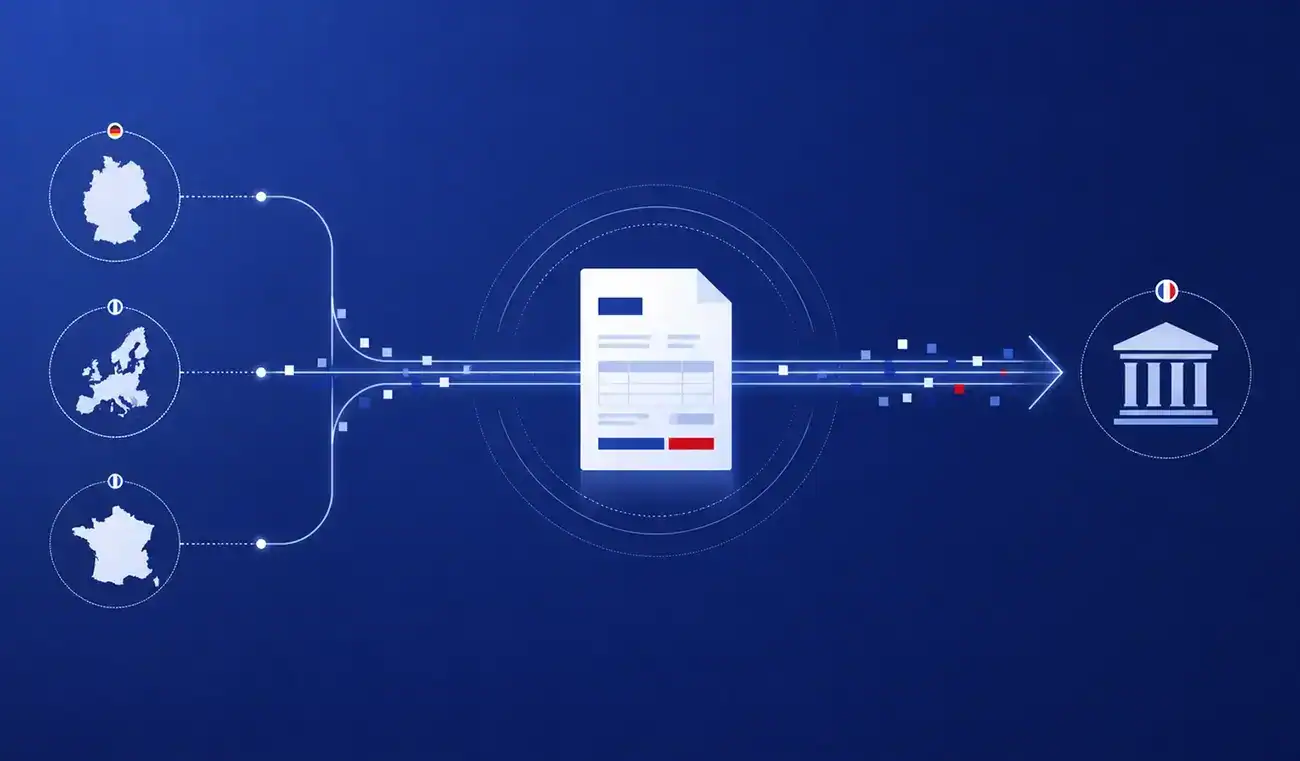
French e-reporting from September 2026: what foreign companies need to check now
French reform: e-invoicing and e-reporting must be distinguished
France’s electronic invoicing reform is being introduced in stages from 1 September 2026. A key distinction applies to foreign companies that hold a French VAT number but do not have a fixed establishment in France.
E-invoicing under Article 289 bis of the French General Tax Code (CGI) generally applies to transactions between two businesses established in France. A foreign business without a fixed establishment therefore does not have to issue or receive electronic invoices through a French platform.
E-reporting under Article 290 II CGI follows a different logic. It can apply when a transaction is deemed to take place in France and the foreign company is liable for French VAT. The type of transaction alone does not determine the outcome. For each flow, the central question is who owes the tax.
Typical situations include companies that hold stock in a French warehouse, buy and resell goods in France or supply French private customers.
The deadline depends on the company’s role in the transaction and its size category:
The assessment is made for the individual legal entity, not the group. The relevant size category is determined as at 1 January 2025 using the last financial year closed before that date. For foreign companies, worldwide turnover is relevant, not only the business carried out in France.
E-reporting covers transaction data such as the net amount, VAT amount and nature of the transaction. Payment data may also be required for services and advance payments. The reporting frequency follows the company’s French VAT filing period.
The information must be transmitted through an accredited platform (plateforme agréée). Affected businesses must select their platform before the deadline that applies to them.
E-invoicing under Article 289 bis of the French General Tax Code (CGI) generally applies to transactions between two businesses established in France. A foreign business without a fixed establishment therefore does not have to issue or receive electronic invoices through a French platform.
E-reporting under Article 290 II CGI follows a different logic. It can apply when a transaction is deemed to take place in France and the foreign company is liable for French VAT. The type of transaction alone does not determine the outcome. For each flow, the central question is who owes the tax.
Typical situations include companies that hold stock in a French warehouse, buy and resell goods in France or supply French private customers.
When does the obligation begin?
The deadline depends on the company’s role in the transaction and its size category:
- 1 September 2026: large enterprises and intermediate-sized enterprises (ETIs/ISEs) acting as sellers or service providers that are liable for French VAT.
- 1 September 2027: micro, very small, small and medium-sized enterprises in the same role.
- 1 September 2027: companies acting as purchasers or customers that account for French VAT themselves, including intra-EU acquisitions and reverse-charge transactions, regardless of size.
The assessment is made for the individual legal entity, not the group. The relevant size category is determined as at 1 January 2025 using the last financial year closed before that date. For foreign companies, worldwide turnover is relevant, not only the business carried out in France.
What information must be reported?
E-reporting covers transaction data such as the net amount, VAT amount and nature of the transaction. Payment data may also be required for services and advance payments. The reporting frequency follows the company’s French VAT filing period.
The information must be transmitted through an accredited platform (plateforme agréée). Affected businesses must select their platform before the deadline that applies to them.
Three common business situations
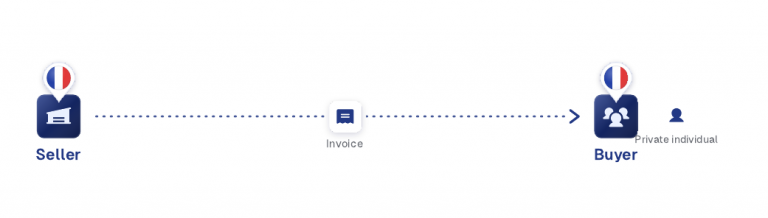
1. Online sales to private customers from a French warehouse
If a German company holds stock in France and supplies French private customers from that stock, the transaction is generally a French domestic supply. The company owes French VAT and must include the transaction data in its e-reporting.
An important exception may apply where the B2C sales are declared through the EU One-Stop Shop (OSS). Those flows then fall outside French e-reporting.
If a German company holds stock in France and supplies French private customers from that stock, the transaction is generally a French domestic supply. The company owes French VAT and must include the transaction data in its e-reporting.
An important exception may apply where the B2C sales are declared through the EU One-Stop Shop (OSS). Those flows then fall outside French e-reporting.
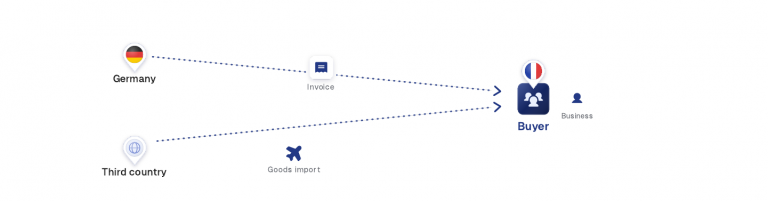
2. B2B supply to a customer registered for VAT in France
If the business customer holds a French VAT number and accounts for the tax under the reverse charge, the reporting duty follows the VAT liability. It therefore rests with the customer rather than the foreign supplier.
The conclusion may change if the customer does not have a French VAT number and the foreign company becomes liable for French VAT itself. The transaction may then fall within the company’s own e-reporting. The fact that VAT is not charged on an invoice does not automatically mean that no reporting duty exists.
If the business customer holds a French VAT number and accounts for the tax under the reverse charge, the reporting duty follows the VAT liability. It therefore rests with the customer rather than the foreign supplier.
The conclusion may change if the customer does not have a French VAT number and the foreign company becomes liable for French VAT itself. The transaction may then fall within the company’s own e-reporting. The fact that VAT is not charged on an invoice does not automatically mean that no reporting duty exists.
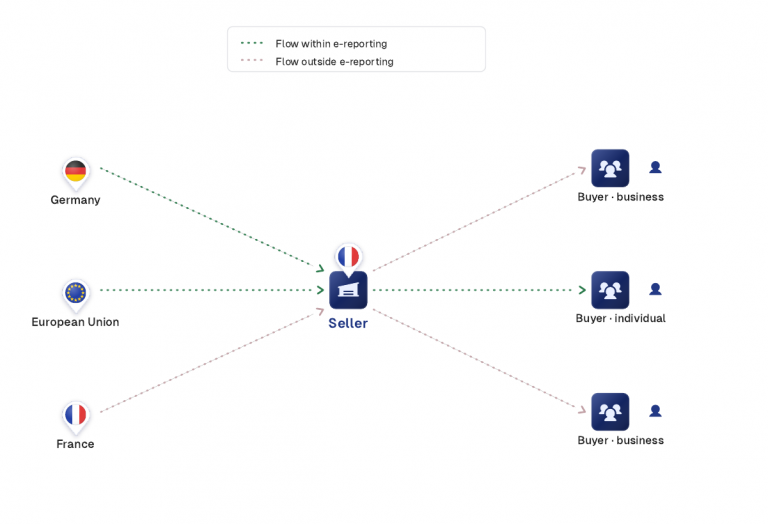
3. One company with several transaction flows
Each flow must be assessed separately. Intra-EU acquisitions may become reportable from 1 September 2027. Purchases from French suppliers with French VAT, intra-EU supplies and certain B2B sales subject to reverse charge may remain outside the company’s own e-reporting. B2C sales to French private customers outside the OSS may be reportable.
One French VAT registration can therefore produce different reporting outcomes and start dates. A blanket assessment of the company’s entire French activity is not sufficient.
Each flow must be assessed separately. Intra-EU acquisitions may become reportable from 1 September 2027. Purchases from French suppliers with French VAT, intra-EU supplies and certain B2B sales subject to reverse charge may remain outside the company’s own e-reporting. B2C sales to French private customers outside the OSS may be reportable.
One French VAT registration can therefore produce different reporting outcomes and start dates. A blanket assessment of the company’s entire French activity is not sufficient.
What companies should prepare now
Companies should determine their size category, map all French transaction flows and establish who is liable for French VAT in each case. They should also check whether B2C sales are reported through the OSS. The next step is to select an accredited platform in good time and integrate it into the relevant reporting processes.
Does French e-reporting affect your business? We can review your transactions, supply chains and customer types to determine which flows must be reported and from when.
Updated: 27 August 2026. This information does not replace a case-by-case review. Official source: [DGFiP – E-reporting requirements for foreign companies without a permanent establishment in France] (https://www.impots.gouv.fr/internationalenbusiness/e-reporting-requirements-foreign-companies-without-permanent-establishment).*
If you have further questions, our accountants will be happy to provide you with personal advisory. Additionally, we are available to advise you throughout France and Germany by phone and video conference. Your Franco-German tax consultancy FRADECO.
Disclaimer
Although the greatest possible care has been taken in the preparation of this newsletter, we reserve the right to make changes, errors, and omissions. The abstract legal presentation in this newsletter is no substitute for individual civil and tax law advice on a case-by-case basis. Subsequent changes to the legal framework, the views of the German or French tax authorities or case law, including with retrospective effect, are possible.


